
- November 23, 2020
Transforming Banking with Omni-channel Approach
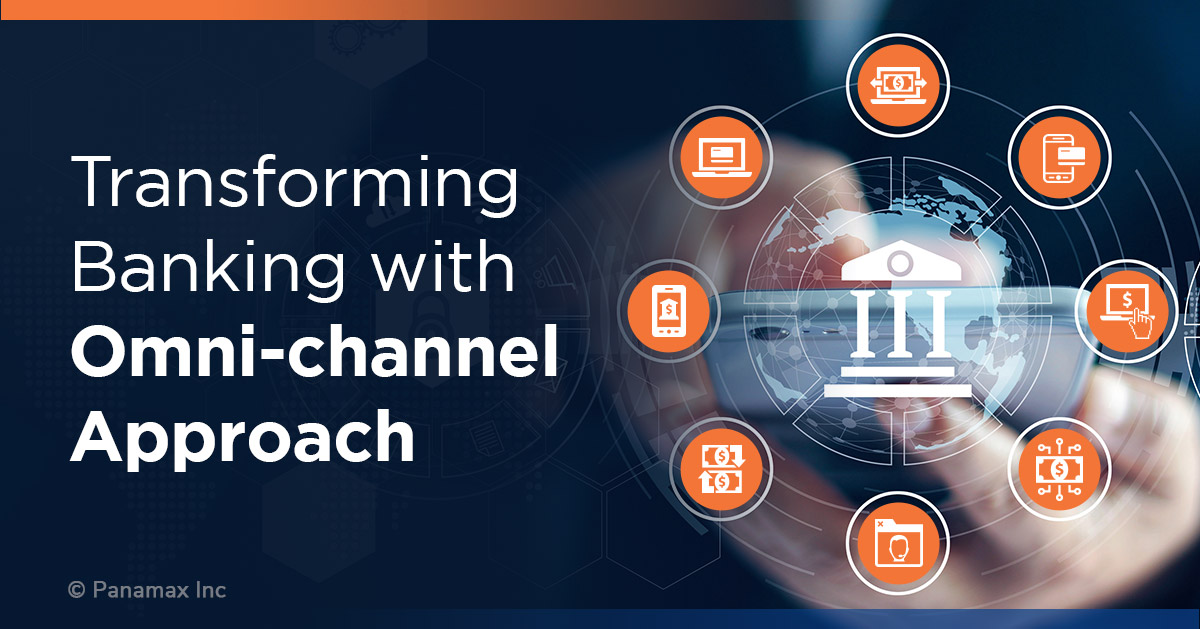
The world is going through unexpected circumstances with COVID-19 changing the strategy for almost every industry. The banking industry was already going through renaissance with cashless transactions and the digital banking approach. But today with more and more contact restrictions coming into picture, it has become a necessity rather than just a feature. Several banks were already researching and even working on a strong omni-channel paradigm even before the pandemic hit.
What started as a single channel medium translated to an aggregation of multiple channels that remain connected like an IoT banking ecosystem. The single channel banking involved just one touchpoint that connected customers to the bank, mostly the physical bank branch. Gradually, the introduction and accessibility of different devices gave way to the development of multi-channel experience that allowed the customers to interact with the bank through any of the devices individually. Further came the cross-channel experience that provided multiple touchpoints to engage with the customer individually. This mechanism still lacked the ability of the devices to interact with each other interchangeably. This shortcoming led to the development of omni-channel ecosystem that integrated several touchpoints seamlessly allowing customers to connect with their bank through a device of their choice and much more.
Key Features – Omni-channel Banking
Consumers want to move fluidly from one channel to the next. This includes the ability to start a transaction online and completing it in the branch. The customers might want to research something online and have a bank personnel explain more about it when they go into the branch. However, with the digital-first approach today, a bank may choose to have fewer branches, but the branch personnel will gradually transform from transaction processors to financial services experts bringing value to customers by offering personalized and sophisticated services.
The data generated through digital mediums of operation have led banks and FIs to integrate their business intelligence and turn it into actionable data. Here are some services that can be offered through a combination of an efficient digital and personalized banking:
- Simplified onboarding process
- Anytime, anywhere banking
- Higher interest rates on savings
- Robust reward programs
- Convenient usage
- Sophisticated firewalls and fraud management systems
- Scheduled services
- Real-time payments
- Personal consultation
- Management of high-end services like wealth management
How Does Omni-channel Banking Help Customers?
Omni-channel banking is an approach that connects multiple access channels so that the customer can easily start a transaction on one channel and can finish it on a different channel. A 2019 study by Accenture highlighted that about 50% of the users wanted to be able to switch between human and digital channels. An efficient omni-channel banking strategy also helps banks to collect relevant customer data and subsequently create personalized campaigns based on the device usage of that particular customer.
As we see, the world is gradually moving towards an omni-channel approach that is not just making their banking experience seamless but also helping banks to collect customer data. We have had multiple studies that show that despite the prevalence of digital channels, customers still prefer bank branch for certain services.
The omni-channel approach is now at the core of most banks’ strategies as new customer behaviors are strongly influenced by innovation, ease, accessibility, and simplicity of usage. Banks like Chase have enabled customers to make ATM withdrawals without using a card. They simply use the bank’s mobile app and tap the card-less symbol on the ATM with their smartphone. To withdraw cash, they simply enter the bank card PIN to access the regular ATM menu. Convenient and accessible banking services make for a happy customer.
How can Banks go Omni-channel?
Banks must ensure that they serve just the right amount of digital and personal interactions as per the needs of their market. We are noticing an upsurge in banks prioritizing investment into digital interaction platforms along with their physical branches. However, many have not yet made the leap from multiple channels to omni-channel—that is, making movement between channels seamless, and using digitization to enable cross-channel sales and marketing. Thereby missing out on sales productivity.
There are some capabilities banks will need to develop if they wish to go for true omni-channel distribution:
- Advanced data analytics help banks to gauge effectiveness of their omni-channel strategy by deriving information from customer transactions and their digital banking behaviors. These actionable insights can help the banks create more targeted offerings and campaigns.
- Digital marketing is giving significant boost to every industry and banks too can take advantage of this phenomenon. Tracking customer clicks across web pages, measuring time spent on particular subjects, and connecting this data to analytics engines can give some great insights into customer behavior.
- Just like the right digital prowess can win over customers, a customer call at the right time can address any customer grievance. Branch staff are often required to intervene in a customer journey that was initiated or will end in a different channel. Having trained and experienced staff strength can make these customer interactions successful.
- Personalization of digital touchpoints is another important aspect. Any analytical data and personalized insights passed on to the relationship manager enabling them to use the information for better customer servicing.
Banking industry for long has had a reputation of a traditional industry. However, the times are changing. Today there are several fraud-resistant solutions that have changed the course of how banks operate. With the customers changing their stance and opting for a more inclusive retail-like banking, banks should follow the footsteps of other innovative consumer-focused industries. The focus should be on delivering an omni-channel banking experience that is relationship-focused, interactive, relevant, and personal.
Customers expect to access their information, and perform an ever-expanding list of banking actions anywhere, anytime and on any device, just like they do from any other industry. They expect their bank to meet their individual needs and preferences in the same way that their media streaming service or favorite big tech company does. With these expectations, they’re challenging what banks do, why they do it and how it’s done.
Meeting customers’ expectations no longer hinges on a multichannel strategy. Although multichannel banking has been around for years, it is no longer ground-breaking and certainly does not provide a competitive advantage. What can give banks the edge, however, is taking stock of their various channels and strategically considering how their customers use them, and what this reveals about their preferences.
Today’s mobile-first society enables personalization on a scale never seen before, which has transformed consumer habits – from how they spend their free time to how they plan vacations, where and when they shop, and even how they manage their homes.
There’s a lot to learn from industries, like retail, that place a strong emphasis on customer experience and engagement. Some of the world’s top-rated banks have already implemented the retail-like strategy. This has helped them to convert customer experience into a competitive advantage that resulted in increased market share and remarkable customer satisfaction rates.
Panamax recently hosted a webinar – Transforming Omni-channel Banking – Digitization To Personalization, where our subject matter experts discussed the changes in the perception of omni-channel banking and how banks and financial institutions can derive maximum advantage of the phenomenon. Watch the on-demand webinar to learn about the omni-channel banking strategy for your business.
Related Blogs
Transition from Multi-Channel to Omnichannel Banking
Rise of the New Banking Model