
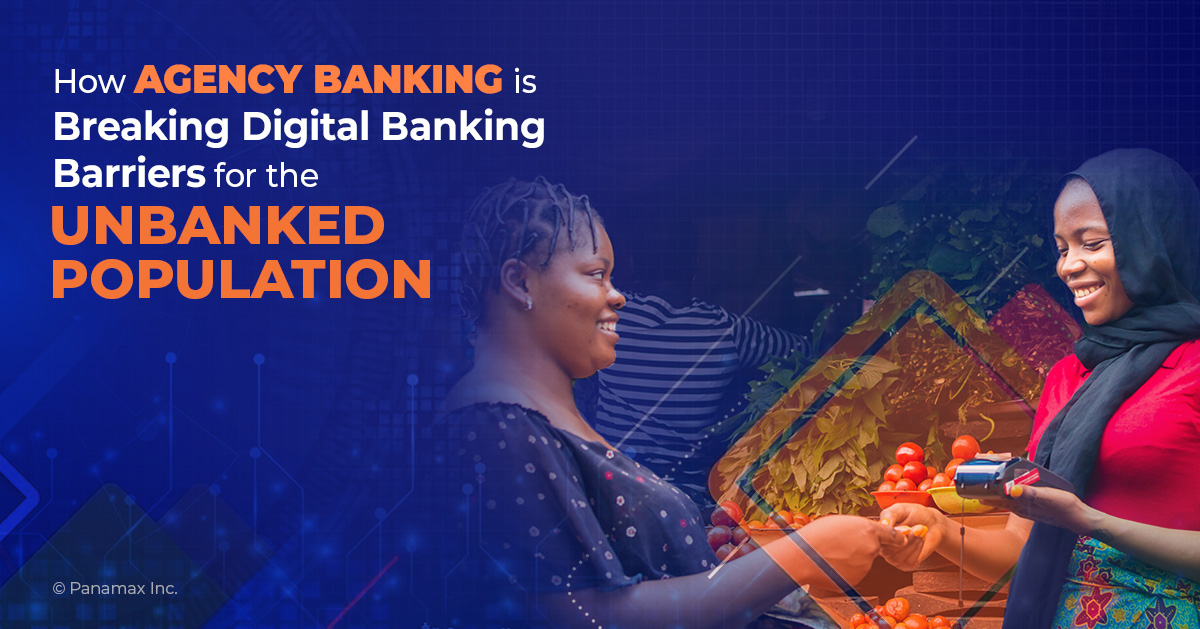
Economic empowerment is based on access to financial services. It is crucial for economic empowerment and poverty reduction globally. However, there is still a large portion of the global population remains unbanked, particularly in regions like the Middle East, Africa, and Asia. In recent years, agency banking solutions have emerged as a transformative solution, bridging the gap between traditional banking services and the unbanked population.
This blog explores the positive impact of agency banking on the unbanked and envisions a promising future for this innovative approach to financial inclusion.
The Rise of Agency Banking
Agency banking refers to providing financial services by non-bank entities, often leveraging existing retail outlets or mobile networks. Authorized agents operating in their local communities allows individuals to access essential banking services, such as deposits, withdrawals, money transfers, and utility bill payments. This model empowers individuals in underserved areas by bringing financial services closer to their doorstep.
The Positive Impact on the Unbanked Population
Increased Access to Financial Services
Agency banking has significantly expanded access to financial services for the unbanked. By leveraging existing retail networks, agents provide essential banking services in rural and remote areas where traditional bank branches are absent or limited. It allows individuals to save money securely, access credit, and conduct transactions conveniently.
Enhanced Financial Literacy
Agency banking acts as a catalyst for financial inclusion in developing nations. The initiatives often include financial education programs that empower individuals with the necessary information, skills and thus empower them to make better financial decisions. By guiding budgeting, savings, and responsible borrowing, these programs promote financial literacy among the unbanked population, contributing to long-term financial well-being.
Boost to Local Economies
The availability of banking services through agency banking has stimulated local economies. It has facilitated small-scale businesses, enabled efficient payment mechanisms for suppliers and customers, and encouraged entrepreneurship by providing access to credit. This boost to local economies can lead to job creation, increased productivity, and poverty alleviation.
Empowerment of Women and Vulnerable Communities
Agency banking has played a vital role in empowering women and marginalized communities. By offering financial services within their communities, it has helped women overcome traditional barriers to accessing formal banking channels. Increased financial inclusion has allowed women to take control of their finances, start and grow businesses, and improve their socio-economic status.
Success Stories Across Regions
Middle East
In countries like Jordan and Egypt, agency banking has made significant strides in expanding financial inclusion. For example, in Jordan, the Central Bank has implemented regulations and licensing frameworks to facilitate agency banking, establishing more than 800 agent outlets. It has provided convenient banking services to thousands of previously unbanked individuals, particularly in rural areas.
Africa
According to the World Bank’s Financial Access Report, 105 million adults (16 percent of adults) in Sub-Saharan Africa lack access to banking services. To rectify this situation, agency banking can play a pivotal role. For example:
In Kenya, the mobile money pioneer has witnessed remarkable success. Mobile network operators and banks have collaborated to create an extensive network of agents, known as “M-Pesa agents,” who provide a wide range of financial services. This initiative has transformed Kenya’s financial landscape, with millions of unbanked individuals accessing banking services and contributing to economic growth.
Asia
In Bangladesh, where a significant portion of the population remains unbanked, agency banking solutions have emerged as a game-changer. Through partnerships between banks and local entrepreneurs, thousands of agent outlets have been established, bringing financial services to previously underserved areas. This has enabled rural communities to save, access credit, and make digital transactions, fostering economic development and poverty reduction.
Future Scenario of Agency Banking
The future of appears promising, with several trends indicating its continued growth and impact:
Technological Advancements
The proliferation of smartphones, digital payment platforms, and biometric identification systems will facilitate the expansion of agency banking. These technologies will enable agents to offer a broader range of services, such as microinsurance, loans, and investment products, thereby deepening financial inclusion.
Collaboration and Partnerships
Governments, financial institutions, and mobile network operators will continue collaborating to create an enabling environment for agency banking solutions. Regulatory frameworks will be refined to ensure consumer protection, agent network supervision, and data security. Partnerships with fintech companies and international organizations will further accelerate its adoption.
Data-Driven Approach
Collecting and analyzing customer data through transactions will enable financial institutions to develop tailored financial products and services for the unbanked population. This data-driven approach will enhance customer experience, promote loyalty, and drive financial inclusion.
Expansion in Rural Areas
Agency banking will continue to focus on reaching underserved rural areas, where most of the unbanked population resides. Efforts will be made to establish agent outlets in remote regions and leverage digital technologies to overcome geographical barriers, bringing financial services to the most marginalized communities.
What are the Best Practices to Maximize the Reach of Agency Banking
Maximizing the reach to the unbanked population requires implementing effective strategies and following best practices. Here are some essential techniques to consider:
Establish a Robust Agent Network
Build a widespread network of agents in urban and rural areas to ensure accessibility for the unbanked population. Agents should be strategically located in areas with high footfall and demand for financial services.
Agent Selection and Training
Carefully select agents with a deep understanding of the local community and good interpersonal and communication skills. Provide comprehensive training to agents on financial services, customer handling, and technology usage to ensure they can effectively serve the unbanked population.
Simplify the Account Opening Process
Streamline the account opening process to make it simple, quick, and convenient. Minimize documentation requirements and offer low-cost or no-cost accounts to encourage adoption among the unbanked.
Leverage Mobile Technology
Utilize mobile technology to extend the reach of the agency banking networks. Mobile-based banking services, such as USSD codes and mobile applications, can enable unbanked individuals to access essential financial services through their mobile phones, even without internet connectivity.
Offer a Comprehensive Range of Services
Expand beyond essential banking services and provide various financial products and services, including savings accounts, microloans, insurance, remittances, and utility bill payments. Catering to diverse needs will enhance the value proposition and encourage greater adoption.
Financial Education and Awareness Programs
Conduct financial literacy programs to educate the unbanked population about the benefits and usage of formal financial services. These programs should focus on building awareness of the importance of saving, budgeting, responsible borrowing, and the long-term benefits of being part of the formal financial system.
Collaboration with Local Stakeholders
Forge partnerships with local community organizations, NGOs, microfinance institutions, and government agencies to leverage their networks and resources. Collaborating with these stakeholders can help raise awareness, gain trust, and reach a larger unbanked population.
Focus on Security and Trust
Implement robust security measures to ensure the safety of customer transactions and data. Build trust among the unbanked population by maintaining transparency, protecting customer privacy, and providing reliable and consistent services.
Tailor Solutions to Local Needs
Understand the target regions’ unique cultural, social, and economic contexts and tailor agency banking solutions accordingly. Localization of services, language support, and consideration of local customs and preferences can significantly enhance adoption rates.
Regular Monitoring and Evaluation
Continuously monitor and evaluate the performance of the agency banking network. Collect feedback from customers and agents to identify improvement areas and optimize service delivery to serve the unbanked population better.
By adopting these best practices, agency banking providers can maximize the reach of their services to the unbanked population, promote financial inclusion, and contribute to economic empowerment at a broader scale.
Conclusion
Agency banking has revolutionized financial inclusion by providing access to banking services for the unbanked population in regions like the Middle East, Africa, and Asia. Its positive impact includes increased financial access, enhanced financial literacy, empowerment of women, and a boost to local economies. With ongoing technological advancements, collaboration among stakeholders, and a data-driven approach, the future of agency banking looks promising, paving the way for greater financial inclusion and economic empowerment for the unbanked.
