
It was the summer of 2018 when the Cboe Global Markets Inc expressed its desire to expand beyond Bitcoins future. Why you would ask? Clearly, because Cryptocurrency Derivatives Exchange are the rising stars of the crypto market. The Cboe aims to build a Crypto-complex and launch cryptocurrency-related Exchange-Traded Notes (ETNs) and Exchange-Traded Funds (ETFs). We are at the brink of an upsurge into the crypto derivatives exchange development. With the current number of Cryptocurrency Derivatives Exchanges at 190, we will only see more and more companies getting into this expanding space with the ease of regulations across the world. In this blog, we will understand this investment instrument in detail and know how you can be a champion of this space.
What is a Derivative?
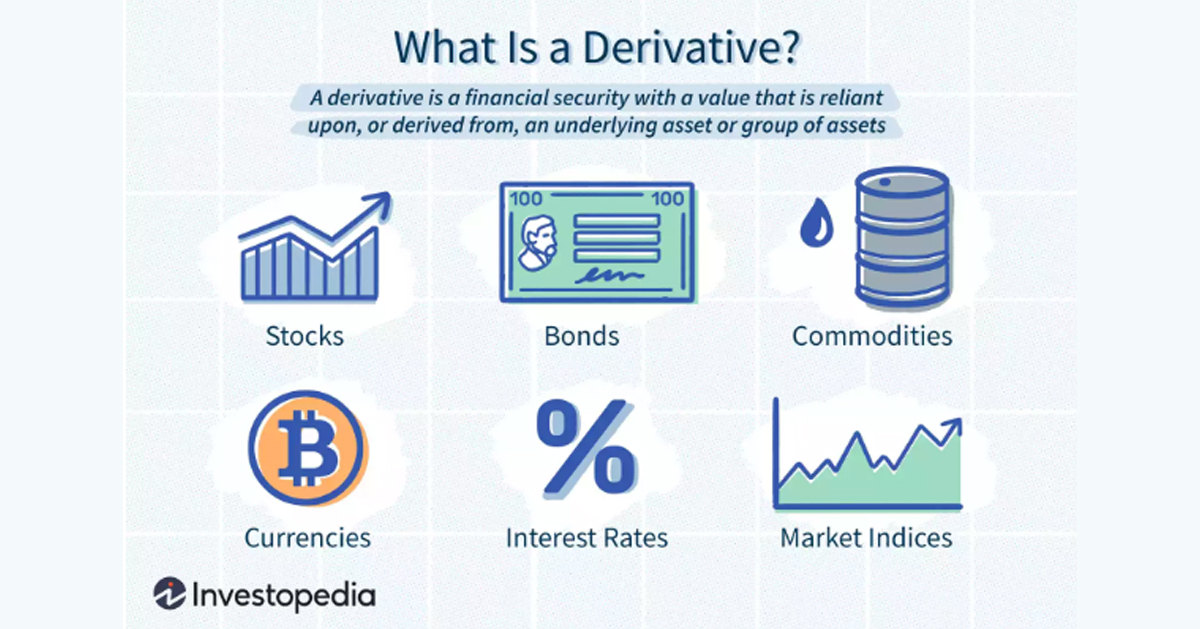
A derivative is an agreement between two or more parties whose value remains a variable depending on an underlying financial asset or a group of assets. Derivatives can be used to speculate the movement of the underlying asset, hedge a position, or leverage holdings. The value of a derivative is generated from the fluctuations in the value of the underlying asset.
Types of Derivatives explained
The most common kinds of derivatives are forwards, futures, swaps and options. While the most common underlying assets are stocks, bonds, commodities, currencies, interest rates, and market indexes.
Forwards: The party agreeing to buy the underlying asset in the future gets a long position while the one agreeing to sell the asset assumes a short position. Forwards are the non-standardized contract written by these parties. The price agreed between the parties is called the delivery price, that is equal to the forward price when the contract is agreed upon.
Futures: A futures contract is a standardized contract written by a clearinghouse where the contract can be bought and sold. They have interim partial settlements in margin requirements.
Swaps: Swaps are the derivatives where two parties exchange cash flows of one party’s financial instrument with the other party’s financial instrument. A swap agreement is created during a transaction that details the payment dates of the cash flow and calculation methodology.
Options: Options are financial derivatives that give buyers the right to buy or sell an underlying asset at a pre-agreed price and date. The basis of options are – Call options and Put options, that help in hedging, income, or speculation.
Derivative Instrument in Crypto Exchanges
The surge of cryptocurrencies began in the 2010s with the launch of Bitcoin in 2009. This resulted in the rise of several other cryptocurrencies that changed the crypto market forever. According to Cryptoticker, in the year 2019, the cryptocurrency derivatives trading volume increased by 840% to an average of 26B average as compared to 2.5B in Jan ‘19. Let’s take a look at the benefits of crypto exchanges:
- Reliability
- Security
- Speed of operations
- Low interest per transaction
- No deposit fees
- A large number of trading pairs and currencies
- Allows bank transfers
- Significant trading volume
- Trading without verification
Selecting the Best Cryptocurrency Derivatives Exchange
Several companies are working on Crypto Derivatives Exchange development but only a few have succeeded in developing a comprehensive ecosystem for the users to trade. Here are the major factors to consider when choosing the best crypto derivatives exchange that can handle your funds and give you options on best trading practices.
- Security: An absolute necessity when dealing with exchanges is security. Handling funds can be a tricky business and therefore you must make sure your money is in safe hands.
- Transparency: Imagine a scenario where you wouldn’t know who is handling your money. Scary, right? You wouldn’t want to fall in such a trap where the exchange does not reveal the owners, head offices or basic details for a user to know what they are getting into. Always make sure you keep only the currency to be used for trading and store the rest in your private wallets to keep it safe from any potential hacking.
- Liquidity: It is simple, any exchange that conducts more trading is more liquid. The more liquidity the exchange has, the easier it becomes for the user to transact easily, quickly and evade price volatility. Additionally, check if there is a lock-in pricing that allows the price to be fixed right from the transaction to the settlement. This is important due to the volatility of the cryptocurrency pricing.
- Technology: When it comes to the crypto market, how can technology be left alone! It is crucial for any crypto derivatives exchange to be built on top-level technology so as to avoid any fraudulent activity. Does the URL have an https connection? Is there a two-factor authentication? Are your deposits stored offline in cold storage? Is the exchange being monitored 24*7 with SMS and email transaction notifications? These are some questions you should answer before selecting the crypto derivatives exchange to trade.
- Fees: Most exchanges charge less than 1% per transaction which decreases if the trading volume increases. Verify if there is any withdrawal fee for the currencies you want to trade on. It could vary for different altcoins. Several exchanges also offer convenient payment methods but charge high deposit fee for the facility.
- User Experience: It is essential for an exchange to be available on both desktop and as a mobile application with an easy and no-hassle UI. As for cryptocurrency derivatives exchange, a customer would generally prefer not having to share detailed information about the self. That could well be a deciding factor for you.
When dealing with crypto derivatives exchanges, it becomes crucial to understand that this is a fairly developing concept and hence several regulations come into play depending on your geography. Whenever conducting a search for the best crypto derivatives exchange, make sure you are acquainted with the options available, do a comparative analysis while keeping in mind the regulations for your country.